The Afghan Hound originally comes from Central Asia and was first used to assist in hunting. Because of that background, it developed high speed, a fierce side, and a more excitable temperament. Those traits are often cited as the reason why the Afghan Hound is considered unsuitable for dense urban life and is listed as a restricted breed in parts of China.
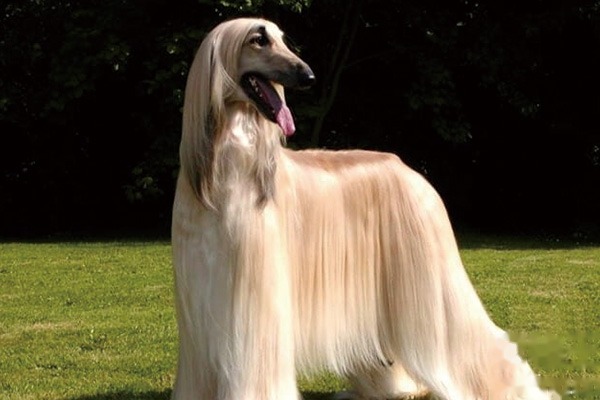
The Afghan Hound Is Restricted in China
If you like Afghan Hounds, it may be disappointing to hear that they are treated as restricted dogs in China. The exact regulations differ somewhat by city, but the main principles are similar. Most restricted breeds tend to share several traits: they are large, impulsive, and difficult to control. The Afghan Hound is said to fit these criteria quite closely.

Characteristics of the Afghan Hound
The Afghan Hound is a large dog, standing around 70 centimeters at the shoulder and weighing more than 20 kilograms. That size alone is enough to place it on restricted lists in many regions. In addition, it is often described as one of the lowest-intelligence dog breeds. Without systematic training, its very independent personality makes it difficult for many owners to control. Training an Afghan Hound well requires a high degree of expertise, something most people are unable to provide.

The Afghan Hound's defining traits are closely related to its origin. It was born to hunt and was used to pursue very fast animals such as gazelles, wolves, and snow leopards. That means it is naturally fast, somewhat nervous, and unusually lively. Those features are excellent for hunting but clearly not ideal for city living. According to the article, there have even been cases abroad where people were bitten by Afghan Hounds kept as pets.
In summary, the Afghan Hound's own characteristics make it poorly suited to crowded urban life. There is also one more very practical point: its coat is extremely difficult to maintain and requires a great deal of both time and money. Anyone who wants to keep one needs to ask honestly whether they can meet that demand.